When talking of modern emcees, it’s hard to think of anyone more talented or prolific than Mos Def. Not only has he cultivated an innovative and unrivalled Hip-Hop style, but he’s starred in Hollywood films, acted on Broadway and hosted a hit TV show. Whilst his career has now spanned 15 years, in 2009 he remains a Hip-Hop artist in the purest sense of the word, and in the midst of mediocrity his work is a stark reminder of what the genre once was.
Born Dante Terrel Smith, Mos Def came of age in the days of A Tribe Called Quest and De La Soul. This com
bined with his life in the projects of Brooklyn, instilled Mos Def with the political awareness that would later appear in his rhymes, and make him one of the most powerful rappers of his generation.
Whilst Def was a prominent artist for much of the latter half of the 90’s, working with some of the great Hip-Hop acts of the day, it was his collaboration with fellow Brooklyn emcee Talib Kweli that brought him commercial and critical success.
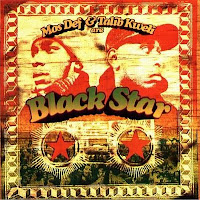
Under the name Black Star, the duo released their powerful self-titled debut in 1998, and established themselves as two powerful voices in the fading Native Tongues movement. With hit single ‘Definition’, Def and Kweli commented on the state of Hip-Hop post Biggie and Tupac, reminding a generation that whilst their chosen two were gone, the genre was far from dead.

Whilst Black Star were a tour de force, Mos’ decision to go solo resulted in his seminal work.
Black on Both Sides was released only a year after Black Star’s debut, and became an instant success, earning Def new fans and accolades.
This solo debut saw him in full political force, with tracks addressing everything from Y2K to the true origin of Rock ‘n’ Roll. However, it was also an album of tremendous range stylistically. Of course the glorious Hip-Hop tunes were present and correct, but with this release, Def set himself apart by choosing to sing exclusively on tracks like ‘Umi Says’, adding balance and beauty to the album.
Whilst it’s wealth of vibe made his solo debut a success, its extension of the East Coast form made
Black on Both Sides a classic. It was Native Tongues, it was jazz enthused, yet it was Hip-Hop for the new millennium.

As Mos’ career continued, his style became more experimental and his rhymes more politically and spiritually charged. With his second solo album,
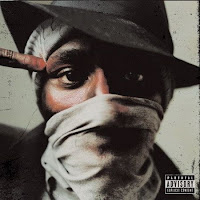
The New Danger he provided a Muslim’s perspective on post 9/11 America, whilst the contribution of backing band Black Jack Johnson, continued Def’s crusade to reassert black identity on Rock ‘n’ Roll.
Indicative of his ever stronger political resolve, Mos made his entrance at the 2005 MTV Video Music Awards, on a stage mounted on the back of a flat top truck. He was then abruptly arrested, despite the fact he had a performance permit, as he began to perform ‘Katrina Clap’ a track that, as the title suggests, heavily criticises the Bush administration for its response to Hurricane Katrina.
However, whilst
The New Danger was by far more successful in the charts, its inability to compare to
Black on Both Sides caused decreased interest in his further output. His 2006 album,
True Magic was released with very little promotion from his record label, leading to sales falling short of 100,000. As a result his contract with Geffen was not renewed.
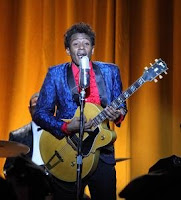
For the past few years, Mos Def’s music career has been in a state of flux. However, this hasn’t made him any less productive. His appearances in such films as ‘Be Kind Rewind’ and ‘Cadillac Records’, have seemingly provided another outlet for the emcee’s creativity. Furthermore, though he may not have been releasing albums, Def continued to make musical and political statements.
But whilst he certainly didn’t let us forget about him, when it was announced a new Mos Def album was in the works, fans were sure to breathe a sigh of relief. To be named
The Ecstatic, the fourth addition to his canon looks to be a fitting comeback, with billed collaborations with the likes of Slick Rick and Madlib.
Having stated in interviews that
The Ecstatic may well be his last full length album (at least for a while), one can only feel this is a great waste. Mos Def’s adventurousness and pure lyrical skill have set him apart in a sea of commercial rappers. Whilst he may not have pioneered the styles he incorporated into his music, he did reinvent and weave them into something the younger generation could connect with. Even if this next album will be his last, his work will continue to influence those who appreciate soulful, expressive Hip-Hop.

 For the past seve
 n years The X Factor has been the bench mark of poor taste. Yet the debate which accompanies every series has become as tiresome as the show itself. The two tribes which emerge each year always regurgitate the same arguments: one side claiming that Simon Cowell is bringing about cultural oblivion, the other insisting it is good, clean, TV fun, which, on occasion, produces some truly great pop stars.


 Posts
Posts


